HEA logo

HEA logo

Monday, November 16, 2015

Cooking Up Holiday Energy Savings

For many of us, the best holidays involve home-cooked meals and wonderful aromas of turkey, stuffing and baked goods wafting throughout the house. It means a busy kitchen and a bustling house full of family and friends. If this rings true for you, despite the increased kitchen activity, you still have an opportunity to save energy during the holidays.

Cut carbs (carbon) painlessly
In addition to being the “heart of your home,” your kitchen could pump savings back into your wallet.  According to the Department of Energy, cooking accounts for 4.5 percent of total energy use in U.S. homes. This number, combined with the energy use associated with refrigeration, dishwashing and hot water heating means that as much as 15 percent of the energy in the average American home is used in the kitchen. So, saving energy here can have a significant impact on your household budget.
For example, when preparing side dishes, baked goods, soups and such, consider using small appliances like a crock pot, toaster oven, microwave or warming plate instead of your conventional oven or stovetop. These small appliances are a smart, energy-saving alternative, typically using about half the energy of a stove. 

Seal in efficiency
When using your oven, don’t peek! Opening the oven door can lower the temperature by as much as 25 degrees and causes your stove to work harder (consuming more energy) to return to the desired cooking temperature. If your recipe calls for baking the dish more than an hour, it is not necessary to preheat the oven.  If your oven is electric, you can likely turn the oven off for the last five to ten minutes of cooking and allow the residual heat to complete the job. Clean burners and reflectors increase efficiency and offer better heating, so don’t neglect this small but important task.     
Just as keeping the oven door closed seals in efficiency and enables the stove to operate more economically, the same rules apply to the refrigerator and freezer. Keep the doors closed as much as possible so cold air doesn't escape. However, leaving the door open for a longer period of time while you load groceries or remove items you need is more efficient than opening and closing it several times.
If you are entertaining a large group, you may be able to give your furnace a brief holiday. When your oven is working hard and you have a house full of guests, the heat from the stove and the guests will keep your house comfortable, enabling you to turn down the thermostat.

Clean up with energy savings
When it’s time to clean up, extend fellowship to the kitchen, and wash and dry dirty dishes by hand. This uses less energy than a dishwasher. However, don’t leave the water running continuously, or you will waste energy. If you do use the dishwasher and rinse dishes before loading them, use cold water. Run the dishwasher with full loads only, and if possible, use the energy-saving cycle. Note that dishwashers that have overnight or air power dry settings can save up to 10 percent of your dishwashing energy costs.

By adapting these efficient practices in your kitchen, energy savings will be one more thing to be thankful for this holiday season. 

Friday, June 5, 2015

Invest in Efficiency and Watch Your Savings Grow

It is summer in Alaska and most of us use less electricity now than in the winter. But it is always a good time to investment in energy efficiency - it's a year-round awareness.
Making your home more energy efficient is still one of the safest investments you can make. Try employing these energy saving measures to collect major returns on your investments:
  • Install a programmable thermostat
  • Install a hot water heater “blanket”
  • Change your shower heads
  • Upgrade appliances like your clothes washer or your refrigerator
  • Replace old windows with energy efficient ones
  • Install water efficient toilets  

Making all of these changes at once could be difficult – if not impossible – but investing in just one of these measures can yield a significant return on your investment.
For example, installing a new, energy efficient clothes washer can yield around a 24 percent return on investment. Do your research, and make sure you are purchasing the right size appliances. A small, energy efficient washer will save you money, but if you have a larger family, having to do multiple loads could negate your energy savings.
Investing in any of these energy efficient improvements will keep you cool in the summer, warm in the winter and will make significant changes to your energy bills. So do yourself, and your wallet, a favor and invest in a more energy efficient home! 

Wednesday, April 22, 2015

Making the Digital Switch: Upgrade your lights from analog to digital with LED bulbs

Just as you upgraded your TV/cable and phone from an analog system to digital for better sound and picture quality, the lighting industry has been modernizing its options and products in order to offer consumers greater energy efficiency. For the past several years, traditional incandescent bulbs have been phased out in favor of halogen and compact fluorescent (CFL) lights that offer greater efficiency. Even more recent innovations in technology have focused on Light Emitting Diode light sources, or LED bulbs, which are essentially digital light.  

Longevity and efficiency in one

Known for their longevity and efficiency, LED lights have an estimated operational life span of up to 50,000 hours. This equates to 17 years of continuous operation, or 34 years of 50 percent operation. So if you were to use an LED fixture for eight hours per day, it would take approximately 17 years before it would need to be replaced.

LED lights are different from fluorescent and incandescent light sources, as LEDs do not contain a gas or filament of any kind. Instead, the entire LED is made up of a semiconductor, which is solid in nature and makes LEDs more durable. LED lights are small, packed electronic chip devices where two conductive materials are placed together on a chip (a diode). Electricity passes through the diode, releasing energy in the form of light. Unlike fluorescent lights that require a few minutes to warm up before reaching their full level of brightness, LEDs achieve full illumination immediately.

The cost of “analog” lights

If you are still hanging on to your traditional or “analog” era lighting, your light bulb is operating at only 20 percent energy efficiency. Eighty percent of the electricity from the “analog” bulb is lost as heat. To illustrate how this inefficiency impacts your wallet, consider this. If you have traditional lighting and your electric bill is $100, then you are spending $80 to heat the room instead of light it. Using LED illumination with 80 percent efficiency, your electricity cost would be approximately $20, saving you about $80.

Ideal for outdoor use

LEDs are ideal for outdoor use because of their durability. LED lights are resistant to vibrations, shock and external impacts such as exposure to weather, wind and rain. In addition, they are temperature resistant and operate in colder outdoor temperatures. In contrast, colder temperatures may affect operation of fluorescent lamps. LEDs can also be dimmed, allowing maximum flexibility in usage.

Smart choice for emergency use

If you have a portable generator or battery-back-up, in the event of a power outage or weather emergency, LED lights are a smart complement to your back-up power system. Because they draw so little power, using LED lights instead of CFL or traditional bulbs will allow you to illuminate more areas or channel the “saved” energy to other needed applications.

Monday, October 13, 2014

Unwrap Winter Energy Savings

The holidays are upon us! It’s that special time of year when we spend a great deal of time with friends and family, either in the kitchen or out and about shopping for the perfect gift. As you find yourself wrapped up in the holiday excitement, Homer Electric reminds you of a few ways to be energy efficient during this busy time of year.

COOKING EFFICIENTLY
• Be kind to your oven. Every time you open the oven door to check on that dish, the temperature
inside is reduced by as much as 25 degrees. This forces the oven to use more energy in order to get back to the proper cooking temperature. Try keeping the door closed as much as possible. Also, remember to take advantage of residual heat for the last five to 10 minutes of baking time – this is another way to save energy use. If you’re using a ceramic or glass dish, you can typically set your oven 25 degrees lower than stated, since these items hold more heat than metal pans.
• Give your burners some relief. The metal reflectors under your stovetop burners should always be clean. If not, this will prevent your stove from working as effectively as it should.
• Utilize small appliances. During the holidays, the main appliances used are the oven and stovetop. Try using your slow cooker, microwave, toaster oven or warming plate more often. This will result in substantial energy savings.

HOME EFFICIENCY
• Take advantage of heat from the sun. Open your curtains during the day to allow sunlight to naturally heat your home, and close them at night to reduce the chill from cold windows.
• Find and seal all air leaks. Check areas near pipes, gaps around chimneys, cracks near doors and windows and any unfinished places.
• Maintain your heating system. Schedule services for your heating system before it gets too cold to find out what maintenance you may need to keep your system operating efficiently.
• Eliminate “vampire energy” waste. When you are not using an appliance or an electronic, unplug it to save energy. Power strips are definitely a good investment for your home.

EFFICIENT SHOPPING
• Purchase LED holiday lights. A string of traditional lights uses 36 watts of power and a string of LED lights only uses 5 watts. They can even last up to 10 times longer!
• Ask for Energy Star-rated TVs and appliances. This will save you a lot of power use because the standby-mode is lower and the device will use less energy overall.
• Combine errands to reduce the number of small trips. To-do lists seem to pile up around this time of the year. Believe it or not, several short trips in the winter can use twice as much fuel as one longer trip covering the same distance as all of the shorter ones.
Being energy efficient is usually not top priority when celebrating the holidays, and most of us don’t realize the lack of efficiency until the next bill comes in. Prevent your post-holiday shock this year by thinking creatively and remembering all of these tips!

Thursday, August 21, 2014

Draft Dodgers: Weather Stripping Your Home

There is no doubt about it; the cold weather is on its way. Not only is it important to make sure that your heating unit is working properly, but you should check your home to make sure that none of that heat is escaping.

When the weather turns colder, drafts around windows and doors are constantly letting in cool air. Most people will immediately want to raise their thermostat even higher; however, that will cause you to use more energy when you don’t necessarily need to. The best solution is to weather strip your home. This is typically an easy fix that will eliminate energy waste and help you save on your monthly electric bill.

Sometimes drafts are obvious, and other times the openings are much smaller. Here are two quick ways to find out if heat is escaping from your home. For doors, look for daylight between the door and its frame, if you see even a hint of light in between the two, you need to weather strip that area. For windows, place a piece of paper between the sash and the seal then close it. If you can remove the piece of paper from the window without ripping it, you need to weather strip that area as well.

The great thing about all of this is that weather stripping is easy! There is an assortment of materials available to you (like rubber, foam, metal, etc.) and they are all inexpensive. Once you have purchased what you need, keep the following in mind before you begin weather stripping: be sure the surface is dry and clean, measure the area more than once for best accuracy, and apply so that strips compress both sides of the window or door.

To weather strip windows:

  • Place the stripping between the frame and the sash.
  • Be sure that it compresses the window when shut.
  • Check to make sure that the stripping does not interfere with the moving of the window.


To weather strip doors:

  • Choose the proper sweeps and thresholds for your door.
  • Weather-strip the entire door jamb.
  • Make sure the stripping meets tightly at both corners.
  • Use a thickness that allows for a tight press between the door and the ground, but one that does not make the door difficult to shut. 

Roughly half of the energy that your home uses comes from heating and cooling. So the next time you feel an uncomfortable draft in your home, do not immediately crank up the heat. Check to find out where the draft is coming from and properly weather strip the area. This will ultimately save you more energy and more money in the end.


Friday, July 18, 2014

Using Energy Efficient Window Treatments

A recent study by two federal agencies used rigorous science and analysis to dissect window-covering choices—how you use them, where you install them and whether they really save energy. These days, every penny counts, which is why Homer Electric always recommends finding ways to be energy efficient around the house.

Windows account for 25 to 40 percent of annual heating and cooling costs, especially in older homes. Blinds, shades, films and drapes are all good options to consider if old or inefficient windows can’t be replaced.

According to a joint government and industry research effort (including the U.S. Department of Energy, the Environmental Protection Agency, Lawrence Berkeley National Laboratory and the Window Covering Manufacturers Association), window coverings—blinds, shades, curtains and awnings—could save significant amounts of energy at a relatively low cost to the consumer. Researchers next want to quantify how much energy consumer households could save based on the dominant types of window coverings used, in which climate zones people live and how U.S. households currently operate their window treatments. In the meantime, you may want to give your window treatments a second look when it comes to cooling, heating and comfort in your home.

It’s important to remember that location, placement and materials are key.  Windows facing west let in the hottest light and need the most coverage, while windows facing south are the most important natural light source and only need light coverage.

Drapery.  During the winter months and in cold climates, draperies work best. Their ability to reduce heat loss depends on fabric type (closed or open weave), color, the season and other factors. Keeping drapes drawn during the winter, especially at night, could save up to 10 percent of heat loss from a warm room. When hanging draperies, make sure they are placed as close to windows as possible to reduce heat exchange and that they are long enough to fall onto a windowsill or floor.
Shades. Shades—pleated or cellular, quilted roller and dual—are one of the simplest product choices for insulating rooms. But depending on the material, some are more energy efficient than others. Cellular or pleated shades are one example of an energy efficient choice. They can help keep air from either entering or escaping your home. Dual shades—highly reflective (white) on one side and heat absorbing (dark) on the other side—are also energy efficient and can be reversed with the seasons. In the summer, lower shades on sunlit windows. Shades on the south side of a house should be raised in the winter during the day, then lowered at night.

Interior blinds. Because of their spacing and openings, blinds tend to be more effective at reducing summer heat gain than winter heat loss. But the level of cooling and heating can also be influenced by the position of the slats. When completely closed and lowered at a sun-filled window, for example, heat gain can be reduced by around 45 percent, according to industry estimates. Slats can also be adjusted to block and reflect sunlight onto a light-colored ceiling.

Window film. Residential window films can be high-end and permanent or inexpensive and temporary solutions to improve the energy efficiency of windows. Clear solar-control window films can block up to 84 percent of the solar energy that would normally enter through windows, according to the International Window Film Association, a nonprofit organization of window film dealers, distributors and manufacturers. When installed well, you may not even know some types of film have been applied to your interior windows, manufacturers say, but they’re working year-round to block ultraviolet light in summer and retain warmth in the winter.

With these and other carefully selected window treatments, you can reduce heat loss in the winter and heat gain in the summer – keeping your house comfortable and your energy bills lower.

Sources: U.S. Department of Energy, Energy.gov, and “Residential Windows and Window Coverings: A Detailed View” September 2013 Report (http://energy.gov/sites/prod/files/2013/11/f5/residential_windows_coverings.pdf)

Monday, June 23, 2014

Light Shopping

Bulbs, brands, lumens, and labels—oh my!

If you have been gradually making the switch to the new energy efficient lighting choices, you’ve noticed that more changes have come to the light bulb aisle. Remember when the odd looking corkscrew compact fluorescent (CFL) bulb was introduced to consumers a few years ago? It’s still there and so are most of the classic pear-shaped incandescent bulbs. But today’s lighting choices have expanded and gotten serious makeovers­—their packaging labels and lingo included. There are LEDs, CFLs, halogen, lumens, CRI, and more, and there is a host of lighting brands. But in recent years, the focus has been on making all bulbs more energy efficient and cost effective. 
End of an Era
We’ve basked in the golden glow of Thomas Edison’s incandescent bulb since the 1800s, but this January marked the end of its run. That’s when the federal government finalized its mandated phase out of selected general-purpose light bulbs and Edison’s less energy efficient incandescent ones. While you still may find 100- and 75-watt bulbs on store shelves, manufacturers in the U.S. stopped producing them. The old 40- and 60-watt bulbs, which represented over half the market, are following suit. What brought about the lighting change? In 2007, the U.S. Department of Energy estimated that home and commercial lighting was consuming more electricity annually–about 300 billion kilowatt-hours of lighting or the equivalent of about 100 power plants—but most of it was wasted. Old-fashioned incandescent bulbs used plenty of energy to produce only 10 percent light, with 90 percent of the energy given off as heat. In comparison, today’s more energy-saving incandescent light bulbs use 25 percent less energy to do the job of lighting the same spaces in your home.
Look on the Bright Side
Prime replacements for the traditional incandescent light bulb are the higher-efficiency CFL and LED or light emitting diode bulbs. But be prepared to pay more upfront for some of the bulbs you choose. Lighting experts say that LEDs are the best choice for energy efficiency and if price is not a concern—they can last for up to two decades, save you 75 percent or more in energy costs, and offer superior color and brightness. However, they can cost an estimated $10 to $60 per bulb.
The Energy Department assures consumers that there is a bright side—lower electricity bills over the longer term. These are their estimates: using a traditional incandescent bulb adds about $4.80 per year to the average household electric bill, but a CFL bulb adds just $1.20 a year and an LED about $1 per year. That means that a typical household could potentially save about $50 per year by replacing 15 old incandescent bulbs.
 Lighting the Way
Since lighting accounts for nearly 20 percent of the average home’s electricity use, don’t stay in the dark when shopping for new bulbs that save on energy and your electric bill. Things to know before you go:

·         Lumens are the new watts. It’s all about the lumens or the amount of light a light bulb emits. Remember this formula: The higher the lumens, the brighter the light—to replace a 100-watt incandescent bulb, choose a bulb that offers about 1,600 lumens. There are handy charts at www.energystar.gov/ that help you compare the old measure of watts to lumens.  

·         Three-steps to your new bulbs. STEP 1: Choose the amount of lumens you need based on how bright you want a room; STEP 2: Determine which bulb has the lowest estimated energy cost per year. This will save you the most money; and STEP 3: Choose bulbs based on your needs—how long it will last and light appearance.


·         Read the label. Always check the package, making sure that it carries the U.S. Department of Energy’s ENERGY STAR® logo. New Lighting Facts labels on boxes will also help consumers understand what they are purchasing—amount of lumens, estimated annual operating cost, and light color.

Monday, December 16, 2013

Green Giving

Hosting a “green” holiday takes a little planning and effort, but the payoff can help your budget stay out of the red. So go ahead and deck the halls with energy savings by following these tips for energy-efficient shopping, baking, and decorating.

Green Shopping
Investing in a big gift? ENERGY STAR TVs and appliances save a bundle on power use. They feature a lower standby-mode consumption than an average device and generally use less energy in all functions.

Include a smart power strip as part of your gift. Most electronic devices consume energy, even when turned off.  In fact, such standby power consumption ranges from 5 percent to 10 percent of a household’s total energy consumption.

Smart power strips save energy by shutting off power to plugged-in gadgets when they go into standby mode. Many smart power strips also have one or two unmonitored, always-on outlets. Use these outlets to plug in devices that always need power, like a cordless phone base or alarm system.

Deck the House in Savings
Know a neighbor who gives the fictional Griswold family from “National Lampoon’s Christmas Vacation” a run for their money? Give them strings of light-emitting diodes (LEDs). A high-quality LED has a life expectancy of 50,000 hours or more. Consider recycling the retired strands at HolidayLeds.com and get a 25 percent off coupon toward the purchase of LED holiday lights.

More isn’t always best. A small, thoughtful display stirs warm holiday feelings and you’ll be grateful when your January power bill doesn’t put a dent in your budget. Consider using timers for holiday lights, too. Set lights to turn on when it gets dark and off once viewers are snug in their beds.  Four to six hours should be plenty of time. And don't forget using ribbons, wreaths, and garland—energy-free decorating traditions still deliver holiday cheer!

Green-Baked Goodies
The U.S. Department of Energy estimates cooking accounts for 4 percent of a home’s total energy use. Add energy costs for refrigeration, hot water heating, and dishwashing and you’ve got a hefty kitchen price tag. As holiday parties and potlucks gear up, keep efficient cooking tips in mind. 

Cut baking temperatures by 25 degrees with a ceramic or glass pan. These pans retain heat better than metal. Use the oven wisely by cooking in large batches, and fit pans into all available oven space. Keep the door closed. Each time you peek into the oven you let out hot air, causing the oven to work overtime to bring the temperature back up.

Get to know how long it takes to preheat your oven and make sure you’re ready to start cooking right away. Insert a stainless steel skewer through meat or baked potatoes to speed the cooking process, or cut food into smaller pieces to shorten cooking time.

Have a convection option on your stove? It helps reduce cooking time and temperature. Turn your electric oven off ten minutes before the end of the cooking time; it maintains the temperature that long. And last but not least, if you’re planning some kitchen time, lower your thermostat. The heat generated in your kitchen can help heat the entire house, especially if you leave the oven door open after you are done.

The holidays are a joyful time, and there's little that feels as good as giving someone you love the perfect gift. Make that gift a positive one and keep the holidays green for both you and your loved ones.

Sources: U.S. Department of Energy

Thursday, October 31, 2013

Energy Savings Info, Food, Fun at 5th Annual Energy & Conservation Fairs

Homer Electric is offering its members an opportunity to learn about the latest innovations in energy saving appliances, home improvements, and alternative energy.

Saturday, November 2nd, from 10 am to 4 pom, HEA will be hosting its fifth annual Energy & Conservation Fair at the Kenai Middle School in Kenai. The Fair will be repeated the following Saturday, November 9th, at West Homer Elementary School in Homer.


Thursday, September 19, 2013

HEA's Energy Efficiency & Conservation Student Contest

Tell HEA your thoughts about electric energy efficiency and conservation by answering the prompt for your grade level. 

Deadline for all entries is Friday, October 18, 2013.

Great prizes include Kindle Fires, Kindle e-Readers, and $25 VISA gift cards.

Open to students in kindergarten through 8th grade in HEA's service territory.  Applications and more information can be found HERE.

Contact Tanya Lautaret for more information at (907) 283-2305 or tlautaret@homerelectric.com.

Tuesday, August 6, 2013

Interested in Featuring Your Business at the 2013 HEA Energy & Conservation Fairs?

Homer Electric is taking applications for Event Vendors to participate in the 2013 Energy & Conservation Fairs this November.

The mission of the event is to inform and educate HEA's membership on the latest energy efficient products and services, as well as to see/touch/understand effective conservation tips and techniques within a community "fair" atmosphere.

To learn more about participating as a vendor and an application, click HERE for the Vendor Packet.

To receive special recognition and advertising benefits, partner with Homer Electric as an Energy & Conservation Fair sponsor. Click HERE for the Sponsor Packet.

Friday, July 19, 2013

DIY Electrical Safety

 
The current economic downturn has inspired more homeowners to tackle do-it-yourself projects than ever before. Faced with declining home values and aging properties, homeowners in some cases may choose not to pay for the services of a licensed electrician.
 
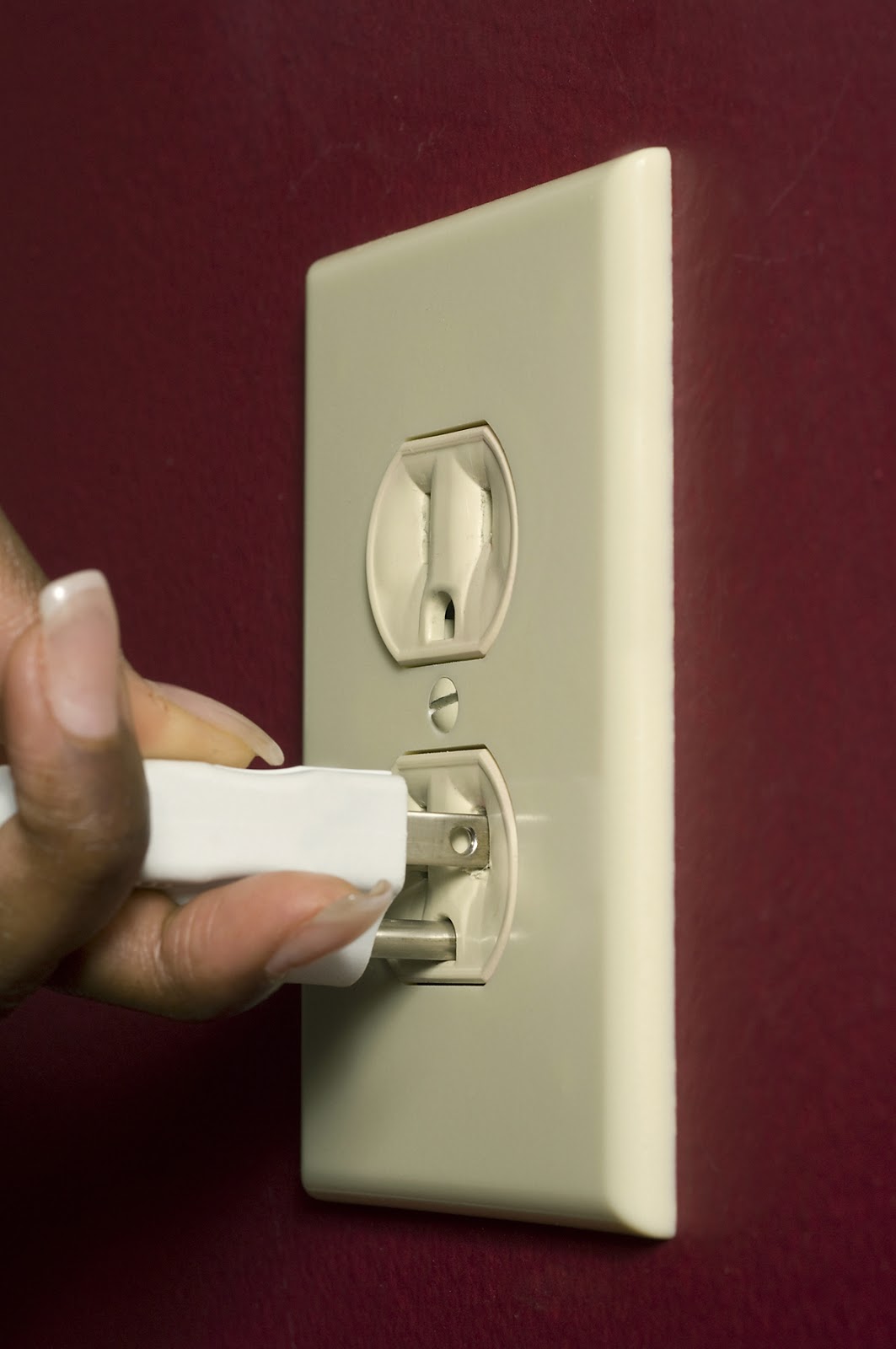
However, most of us don’t have the training or experience needed to safely perform electrical work, which increases the risk of injury and electrocution and potentially introduces new dangers. Working with electricity requires thorough planning and extreme care—cutting corners can be a costly mistake.
For example, electrical outlets cause nearly 4,000 injuries every year. And each year, more than 19,700 people are hurt by ceiling fans that are improperly mounted or incorrectly sized.

The Electrical Safety Foundation International strongly recommends hiring a qualified, licensed electrician to perform electrical work in your home. However, if you decide to do it yourself, consider the following important safety tips:
  • Make an effort to learn about your home electrical system so that you can safely navigate and maintain it.
  • Never attempt a project that is beyond your skill level. Knowing when to call a professional may help prevent electrical fires, injuries, and fatalities.
  • Always turn off the power to the circuit that you plan to work on by switching off the circuit breaker in the main service panel.
  • Be sure to unplug any lamp or appliance before working on it.
  • Test the wires before you touch them to make sure that the power has been turned off.
  • Never touch plumbing or gas pipes when performing a do-it-yourself electrical project.
 
For more tips on treating electricity with care in the home and workplace, visit www.esfi.org.
 
Source: Electrical Safety Foundation International

Tuesday, June 11, 2013

Around-the-Clock Appliances by Magen Howard

In 2013, new appliances don’t just cook your food and keep it cold, wash your clothes and dishes, or offer a few hours of entertainment. These machines boast myriad functions that make our lives easier—but in doing so also consume more energy.

While appliances have become more energy efficient as technology has evolved and federal standards tightened, few ever truly shut down anymore. And as Americans add more and more electronic devices to their households—25 on average, according to the Consumer Electronics Association—much more energy is consumed.

Take a phone charger as an example. Leaving it plugged in without a phone attached doesn’t mean it’s not drawing power—in fact, it uses 0.26 watts of electricity even when a phone isn’t connected, and 2.24 watts when the handset is charging.

Of course, that 0.26 watts by itself might not be a big issue. But if most of your electronic devices are doing that, it can add up to as much as 10 percent of your bill, according to the U.S. Department of Energy.

Take a look around your house—how many cords are plugged in? Of those, how many are actually attached to a device? You might be surprised at how much electricity your family consumes, even when you don’t realize it.

Cable boxes are a big culprit of 24/7 energy use. Leaving your cable box plugged in for a year and never turning it off adds, on average, $17.83 to your electric bill. Toss in a DVR function and that total jumps to $43.46, DOE reports.

And electronics aren’t the only problem. Basic “white goods” appliances like clothes washers and dryers, refrigerators, and dishwashers are so savvy that you can set them to come on late at night, when the wholesale power your co-op must buy costs less—helping your co-op keep power affordable for you and your neighbors. Here again, the bigger you go with a new appliance, the more energy it will use.

Electric bills don’t have to be held hostage by 24-hour-a-day energy use. For starters, use a power strip to turn several electronics on or off at once. For a bigger investment, look into “smart” power strips. They allow you to cut power to certain appliances—say, your TV—while letting power flow to your cable box because it takes time to reboot after being unplugged.

If you’re in the market for a new appliance, look for an ENERGY STAR model. It generally consumes less power all around and uses less standby energy. But remember that you actually have to use those energy-efficient settings on your appliances to see savings on your electric bill.

Sources: U.S. Department of Energy, Consumer Electronics Association

Magen Howard writes on consumer and cooperative affairs for the National Rural Electric Cooperative Association, the Arlington, Va.-based service organization for the nation’s 900-plus consumer-owned, not-for-profit electric cooperatives.

Monday, April 15, 2013

Tuesday, February 19, 2013

HEA Renewable Energy Project Survey

Homer Electric Association (HEA) is interested in gauging the interest of its members in participating in a commonly owned renewable energy project. 

The concept is still very preliminary, but the basic idea is that a group of interested HEA members would share in the cost of the construction and operation of a renewable energy project. The project would generate power and sell it back to Homer Electric.

The project would most likely either be a wind turbine or solar panel arrays, depending on the wishes of the participants. The revenue from the sale of the renewable energy would be shared among the owners, based on the amount of their investment.

The financial figures are just estimates but for the sake of discussion shares in a renewable energy project could be sold in increments of 500-watts for $5000.00. 

The return on the investment would be based on the number of shares held by the investor, the amount of energy produced by the project and the purchase price for the power. As with net metering, the energy produced would first be used to offset the energy used in your primary residence. Also, as a net metering participant you would not be subject to the minimum customer delivery charge.

Click HERE to participate in a brief survey.  Your feedback is appreciated and valued.  Thank you!

Tuesday, December 11, 2012

TV Efficiency Guides: High-Powered TVs Drain Energy

by Megan McKoy-Noe

Which appliance uses more energy: a refrigerator or television? Consumers may not realize that some large entertainment TVs—when used an average of five hours per day—can cost more to operate than a new, basic refrigerator.

According to the U.S. Energy Information Administration, 44 percent of American homes have three or more television sets, and each new set adds to a home’s monthly energy bill.

In the market for a new television? You’re not alone—U.S. consumers purchased an estimated 40 million new televisions with an average screen size of 50 inches last year.

To keep your electric bills in check, here are some tips to consider before buying a new television:

Display Tactics
Three parts of a TV impact energy use: display technology, screen size, and resolution. Plasma and liquid-crystal display (LCD) are the two most popular types of display technologies. Plasma screens often are cited as the largest energy user―mainly because their large 42-inch to 65- inch screens typically draw between 240 watts to 400 watts.

LCD TVs don’t need much power to operate―111 watts on average. Most LCD screens range in size from 21 inches to 49 inches. These TVs fall into two categories: those with cold-cathode fluorescent lamps to illuminate the screen; and backlit models employing a light-emitting diode (LED). LED units offer several benefits, notably better picture quality and thinner and lighter screens. They also use slightly less energy, at 101 watts.

Most prospective buyers already have the ideal screen size in mind; remember that the larger the screen, the more energy you’ll drain. And although a high-definition TV (HDTV) transforms the latest blockbuster movie into a theater-like living room experience, these sets generally use more power to generate better picture clarity.

ENERGY STAR Boosts Ratings
ENERGY STAR TVs cut an estimated $3.5 billion from consumer electric bills annually.  The joint energy efficiency ratings program of the U.S. Department of Energy (DOE) and the U.S. Environmental Protection Agency (EPA) created the first set of voluntary television efficiency standards in 1998. Today’s ENERGY STAR-qualified screens use, on average, 40 percent less energy than standard models, whether you’re watching the latest hit show (active mode) or have the screen turned off (standby mode).

Standards are constantly ratcheting up. In 2008, a 50-inch ENERGY STAR-rated television used 318 watts on average. In 2010, those sets had to curb energy use to 153 watts or less, and by 2012 50-inch TVs could not drain more than 108 watts. ENERGY STAR provides an online guide so potential buyers can find qualified televisions ranked by energy use, size, brand, and display type at www.energystar.gov.

ENERGY STAR Partners like TopTen USA also maintain lists of the top energy efficient televisions (and other household appliances) based on size at www.toptenusa.org.

Look for Labels
The Federal Trade Commission (FTC) has recognized the need for education and easy comparisons for the amount of energy televisions consume. In 2011, a yellow Energy Guide label—a common sight on refrigerators, dishwashers, and other large appliances—became a requirement for TV.

“TVs now vary widely in the amount of energy they use,” comments FTC Chairman Jon Leibowitz. “By comparing information on the Energy Guide labels, consumers will be able to make better-informed decisions about which model they choose to buy, based on how much it costs to operate per year.”

The label compares the annual operating cost of a specific television to the plug-in cost of similar models. The label must be attached to the front of all televisions; websites selling televisions must also provide an image of the label for prospective buyers.

While the FTC Energy Guide labels provide the annual cost to operate a television, consumers in Oregon, Washington, Montana, and Idaho can identify the most efficient ENERGY STAR television models by looking for an orange, “Most Efficient,” sticker. Learn more about the effort at www.energyefficientelectronics.org.

Tune in to Savings
If you’re not in the market for a new TV but want to make sure your model is operating efficiently, these tips may help you save energy:
  • Turn off the TV and other connected devices when they’re not being used—consider using smart power strips to eliminate continually power draw.
  • Reduce TV brightness by turning down the LCD backlight―you’ll save energy and still retain good picture quality.
  • Turn on the power saver mode, which many new TVs offer
  • Control room lighting. While many energy-saving tips reduce brightness of the screen, you can compensate by dimming lights around your TV.
Your television set isn’t the only energy-guzzler in your residence. Visit www.TogetherWeSave.com to find more ways to save energy and money at home.

Sources: ENERGY STAR, Federal Trade Commission, Cooperative Research Network, CNET.com, Energy Information Administration

Megan McKoy-Noe, CCC, writes on consumer and cooperative affairs for the National Rural Electric Cooperative Association, the Arlington, Va.-based service organization for the nation’s 900-plus consumer-owned, not-for-profit electric cooperatives. Brian Sloboda contributed to this article.


Wednesday, November 28, 2012

Electronics Recycling Opportunity

The use of computers, televisions and other electronics continues to grow. As demand increases and technology evolves, we replace older electronics and the volume of electronic waste increases.  Do you have computers, laptops, monitors, printers, cell phones and other electronics that are obsolete?  Not sure what to do with them? 

You can do your part in conserving valuable resources and refurbish used electronics than to dispose of them in landfills. It prevents valuable materials from going into the waste stream.

Take them to the Electronics Recycling Event at the Central Peninsula Landfill on Saturday, December 1st from 10:00 a.m. to 3:00 p.m. The landfill is located at Mile 98.5 Sterling Highway in Soldotna. Click HERE for more information.